
Rental real estate investment in Switzerland: Our guide
As a premier secure investment, yield-generating assets in Switzerland offer unparalleled stability and protection against inflation.
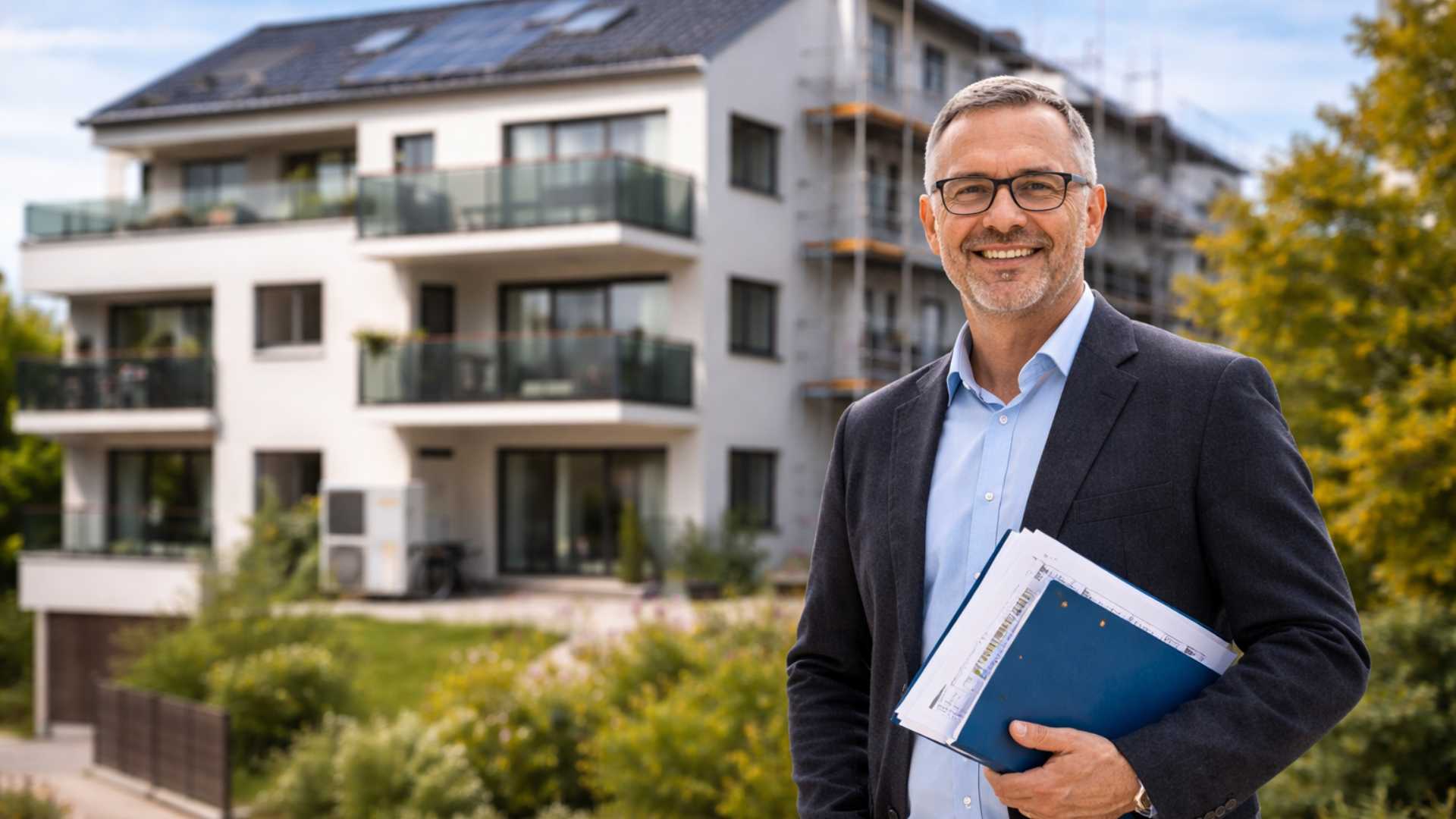
In 2026, demand for housing consistently exceeds supply on the Swiss real estate market. In other words, it is a good time to invest in rental property:
- The national vacancy rate fell to 1.0% in 2026, with shortages below 0.5% in Geneva and Zurich, effectively eliminating the risk of prolonged vacancies (BWO).
- Article 269a of the Code of Obligations allows rents to be indexed to the reference mortgage rate and the CPI, contractually ensuring the maintenance of your real yield against inflation.
- The combination of subsidies from the Building Program (up to 30% of the amount) and the legal pass-through of "value-enhancing works" on the rent allows net profitability to increase after renovation.
Why choose rental property investment in Switzerland?
First of all, investing in a yield property is part of a capital preservation strategy. And unlike other European markets, Switzerland stands out for:
Stability and security: the Swiss market is one of the most resilient in the world
The Swiss market is characterized by extremely low volatility compared to international stock markets. According to the SWX IAZI Real Estate Index, the value of yield properties in Switzerland has maintained steady growth despite global interest rate fluctuations.
This resilience is explained by the strength of the Swiss franc and Swiss banking discipline, which prevents speculative bubbles through strict equity requirements, offering a refuge against European geopolitical instability.
Low vacancy rate: in urban centers, demand far exceeds supply
The housing shortage is no longer exclusive to Geneva; it has spread across the entire Swiss Plateau.
In 2026, vacancies are almost non-existent in economic centers, ensuring the owner continuous income. This near-zero rental risk allows for accepting lower gross returns than in other countries, as the likelihood of unpaid rent or a long-term vacant property is statistically very low in high-demand areas.
Protection against inflation: rents are indexed to the reference mortgage rate
Regardless of the canton, rental property provides natural protection against monetary erosion through a unique legal mechanism. Lease law allows rents to be partially indexed to the Consumer Price Index (CPI) and, more importantly, adjusted according to the reference mortgage rate.
This correlation ensures the real profitability of the investment even during periods of price increases, providing almost automatic indexing of your income to the cost of living.
How to calculate the return on your rental property investment
If a beginner investor’s first reflex is to focus on gross yield, note that in Switzerland only return on equity (ROE) and net yield after taxes are relevant.
Gross yield of the property
It is calculated by dividing the annual rental income by the purchase price including acquisition costs (notary, transfer duties, land registry entry). In 2026, a gross yield of 3.5% in Geneva is considered excellent, while 5% or more is targeted in the Jura arc.
Net yield
For a realistic view of net yield, you must deduct non-recoverable costs:
-
Management fees: 4–5% of rental income.
-
Routine maintenance: small annual repairs.
-
Renovation fund: essential in condominiums to anticipate major works.
-
Insurance and taxes: property tax (depending on canton) and building insurance.
Reference mortgage rate
Set quarterly by the Federal Office for Housing (BWO), it determines the landlord’s right to increase or the obligation to reduce rent.
As of September 2, 2025, the rate was reduced from 1.50% to 1.25%. The next revision is scheduled for March 2, 2026.
Note: a decrease in the reference rate may lead to rent reduction requests from existing tenants.
What type of property to invest in Switzerland?
The choice of property determines the balance between risk and return, as well as the management effort required.
Small apartment (1.5 to 2.5 rooms)
This is the most liquid and accessible yield property! With 36% single-person households in Switzerland (source: FSO), these units meet a deep sociological shift: urbanization, geographic single living, and an aging population.
- Why it works: In cities (Geneva, Lausanne, Zurich), these properties are often rented in less than 48 hours. Vacancy risk is almost zero.
- Drawback: turnover is higher. Plan a financial reserve for repainting and flooring every 3–5 years, as tenants of small apartments statistically stay less long than families.
Yield property (residential or mixed-use)
For larger portfolios, acquiring a yield building is the ultimate risk management tool. Unlike a single apartment, where a vacancy means 100% loss of income, a building spreads the risk.
- Mixed strategy: In Switzerland, buildings with commercial space on the ground floor and apartments above often achieve gross yields 0.5–1% higher than pure residential.
- Sustainability: owning the entire building gives full control over the renovation fund and work schedule, avoiding common delays in condominiums.
High energy potential properties ("Value-add" renovation)
Purchasing a poorly rated property (CECB F or G) for renovation is the top-performing strategy in 2026. The value of a property is increasingly linked to its carbon performance.
In this regard, the Building Program and cantonal aids can cover up to 20–30% of energy renovation costs (heat pump, exterior insulation, triple-glazed windows).
Moreover, lease law allows a rent increase following "value-enhancing works" (investments improving comfort or energy efficiency). This is the fastest way to turn a low-yield property into a prime real estate asset while benefiting from substantial tax deductions.
Rental property taxation
Real estate taxation is one of the most complex aspects for investors. In Switzerland, tax depends not only on your residence but also on the property location.
H3: Income tax on rental income: variable depending on location
Every franc received through rent is considered income. It is added to your salary and taxed at federal, cantonal, and municipal levels.
As taxation is progressive, this additional income can push you into a higher tax bracket. At equal yield, a property in a low-tax canton (e.g., Zug or Schwyz) is more profitable after taxes than one in Lausanne or Geneva.
Imputed rental value: taxation of "fictitious" income
According to tax authorities, owning a property is an economic benefit comparable to income.
For rental properties: if your property is rented, you pay tax on the actual rent. If the apartment is vacant and you cannot prove efforts to rent it (ads, agency), the tax authorities will tax the imputed rental value. This is a fiscal incentive never to leave properties vacant.
Tax deductions: levers to reduce your tax bill
Fortunately, the Swiss system allows significant deductions to lower taxable income:
-
Maintenance of value: 100% of repair, management, and mortgage interest costs are deductible.
-
2026 ecological bonus: energy renovation works (insulation, replacing oil heating with heat pump) are not only deductible but can often be spread over several years to dramatically reduce taxes.
Lex Koller and Lex Weber: market safeguards
Lex Koller and Lex Weber protect the Swiss market from speculation and saturation:
-
Lex Koller: prevents non-resident foreign investors from buying yield properties in Switzerland. Free investment generally requires Swiss citizenship or a C permit (or B permit for EU/EFTA nationals under conditions).
-
Lex Weber: prohibits creation of new “second homes” in municipalities that already have more than 20%. Result: existing yield properties in mountain resorts have become rare gems whose value continues to rise.
Conclusion: Rental property investment remains one of the safest ways to protect your capital in 2026. Discover all our properties for sale on dreamo.ch.
FAQ: Everything about rental investment in Switzerland
Can I invest in Switzerland as a foreigner?
Yes, under certain conditions. Lex Koller limits property acquisition by foreigners. However, purchasing a property for year-round rental is often allowed for residents with a B or C permit.
What acquisition costs should be expected?
In addition to the purchase price, expect 3–5% additional fees (land registry, notary, transfer taxes). Don’t forget mortgage deed creation costs.
Who should manage the rental?
Unless you live nearby and have time, using a property management company is recommended (4–6% of annual rental income).
What counts as a "good" yield in Switzerland?
Currently, a net yield (after costs and taxes) of 2.5–3% is considered very solid for a quality property in a stable area.